
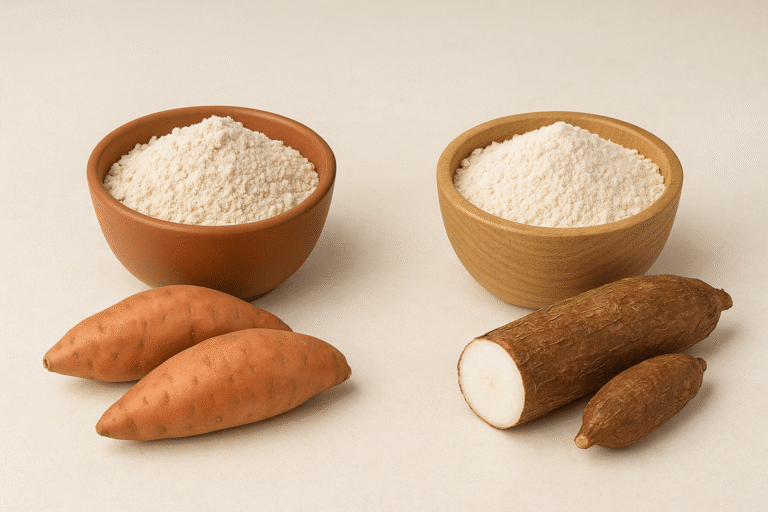
Sweet potato flour vs. cassava flour: differences, properties, and which one to choose
More and more people are looking for gluten-free, healthy, naturally sourced alternatives for home cooking. Among these options, sweet potato flour and cassava flour stand out for their versatility, flavor and benefits. Both flours are naturally gluten-free (as always, if you have celiac disease, look for “certified gluten-free” labeling), but they have important differences worth understanding before choosing one or the other.
In this article, we take a detailed look at what each one offers, how to use them in the kitchen, their approximate nutritional values and which may be the best option depending on your needs.
What is sweet potato flour?
Origin and production
Sweet potato flour is made by dehydrating and milling sweet potatoes. At Sweetba, we work with locally sourced sweet potatoes grown in Lanzarote, which guarantees freshness, proximity and authentic flavor, while also reducing the carbon footprint.
Properties and nutritional profile
- Rich in complex carbohydrates.
- A good source of fiber.
- Notable for its provitamin A (beta-carotene) and natural antioxidants.
- Naturally free from gluten and common allergens.
Main benefits
- Helps maintain more stable energy levels.
- Its natural sweetness helps reduce added sugars in recipes.
- Ideal for fluffy, nutritious baking.
What is cassava flour?
Origin and production
Cassava flour is made from the root of the cassava plant (also known as manioc or cassava). It is a staple tuber in Latin America and Africa. The flour is produced by drying and milling the root.
Properties and nutritional profile
- Rich in easily digestible starches.
- Provides mainly carbohydrates and small amounts of minerals (for example, potassium).
- Naturally gluten-free and nut-free.
Main benefits
- Excellent for thickening sauces or adding elasticity to doughs.
- Light, smooth texture in flatbreads, crepes or pancakes.
- Widely used in traditional preparations such as tapioca.
Key differences between sweet potato flour and cassava flour
Flavor and texture in recipes
- Sweet potato flour: slightly sweet flavor and gentle aroma, perfect for desserts and nourishing breads.
- Cassava (manioc) flour: more neutral flavor and greater elasticity. It can create a slightly chewier crumb depending on the recipe.
Comparative nutritional composition
- Sweet potato: more fiber and antioxidant compounds.
- Manioc: more readily available starch and therefore higher energy density in a similar serving.
Glycemic index and health impact
In general, and depending on how they are used, sweet potatoes tend to have a more moderate glycemic index than cassava, supporting more stable glucose responses. Cassava, being rich in starch, tends to raise blood glucose more quickly. In both cases, pairing them with fiber, healthy fats and protein helps modulate the glycemic response.
Baking and cooking uses
- Sweet potato flour: cakes, cookies, muffins, nourishing breads and pizza bases with a naturally sweet touch.
- Cassava flour: cheese bread, cassava crepes and tapioca-style preparations, arepas and as a thickener for sauces or stews.
Comparison table: sweet potato vs cassava
| Characteristic | Sweet potato flour | Cassava flour |
|---|---|---|
| Flavor | Slightly sweet, gentle aroma | Neutral |
| Fiber | Higher | Lower |
| Glycemic index (approx.) | Medium to moderate (depends on recipe) | Medium to high (depends on recipe) |
| Key micronutrients | Provitamin A (carotenes) and antioxidants | Mainly starches, plus some minerals |
| Main uses | Baking, breads, doughs and bases | Flatbreads, tapioca-style recipes, sauces and thickening |
Which is healthier: sweet potato or cassava?
For people with diabetes
Sweet potato flour is often more suitable due to its higher fiber content and generally more moderate glycemic response. Always adjust portions and pair it with protein and healthy fats.
For those looking for sustained energy
Both provide carbohydrates. Sweet potato flour tends to support more gradual energy thanks to its fiber and the natural structure of the tuber.
For athletes and active lifestyles
Cassava flour can be useful when you need quick energy, while sweet potato flour helps sustain it for longer, especially in recipes with a good balance of fiber and protein.
Practical uses in the kitchen
Gluten-free baking
Sweet potato flour creates moist cakes with a naturally sweet touch. Cassava flour can add lightness to cookies and thin doughs.
Breads and doughs
- Sweet potato: denser, more nourishing breads and sturdy pizza bases.
- Manioc: more elastic doughs, ideal for cheese bread or pancakes.
Traditional and modern recipes
- With sweet potato: brownies, muffins, rustic cookies and tart bases.
- With cassava: cassava tapioca crepes, arepas and flatbreads.
Benefits of locally sourced sweet potato flour compared with imported cassava flour
At Sweetba, we focus on locally sourced products grown in Lanzarote. Local sweet potato flour is more sustainable, fresher and more traceable, while also supporting local agriculture. Cassava, in most cases, travels thousands of kilometers, with a higher environmental impact and more complex logistics.
Sweet potato flour or cassava flour?
Both flours are excellent options, naturally gluten-free and very versatile. The right choice depends on your goals:
- If you want health, fiber, natural sweetness and sustainability, sweet potato flour is your best ally.
- If you need elasticity in doughs or a quick energy boost, cassava flour can be key in certain recipes.
Our recommendation is to use the best of both. If you are aiming for a healthy, eco-minded and local lifestyle, Sweetba locally sourced sweet potato flour is the most complete alternative.
Frequently asked questions
Are cassava flour and manioc flour the same?
Yes. Cassava is also known as manioc. The flour comes from the same root.
Can you combine sweet potato flour and cassava flour in one recipe?
Yes. They work very well together. Sweet potato adds sweetness and fiber, while cassava adds elasticity and lightness.
Which one is better for people with celiac disease?
Both are naturally gluten-free. For maximum safety, choose flours with certified gluten-free labeling if you have celiac disease.