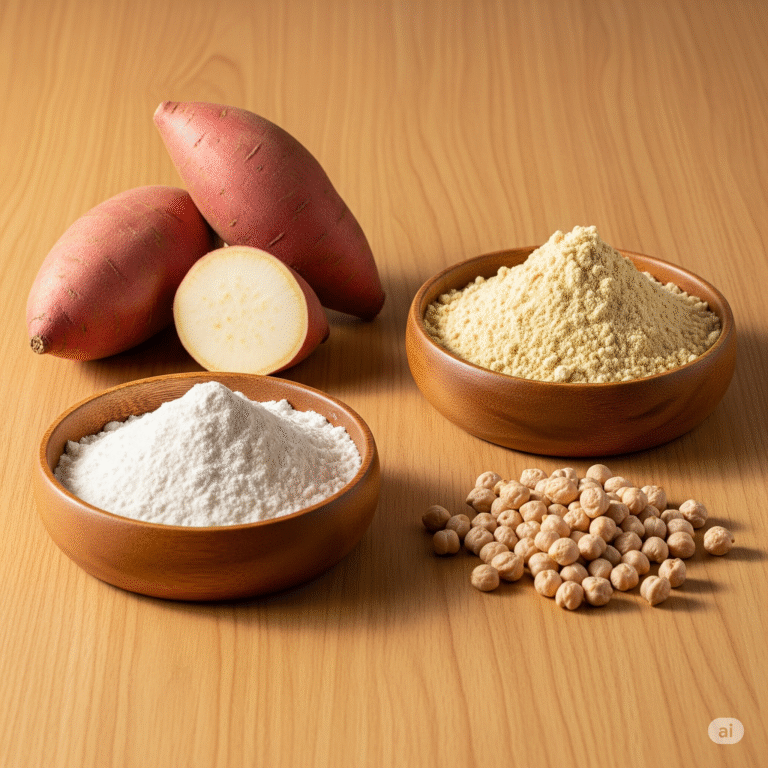
In the world of gluten-free flours, two increasingly popular options stand out for their benefits: sweet potato flour and chickpea flour. Both are natural, healthy alternatives to traditional flours, but with very different profiles. In this article, we’ll compare them from every angle: nutrition, digestion, flavor, sustainability and culinary uses—so you can decide which one best fits your lifestyle or needs.
What is sweet potato flour?
How sweet potato flour is made
Sweet potato flour is made from sweet potatoes that are dehydrated and cold-milled into a fine powder. At Sweetba, we work with locally sourced sweet potatoes from Lanzarote, grown in volcanic soils rich in minerals. This production method ensures an authentic flavor and outstanding quality.
Nutritional properties of sweet potato flour
This flour is rich in complex carbohydrates, fiber and natural antioxidants such as beta-carotene—especially when made from purple or orange sweet potatoes. It also provides small amounts of B vitamins and minerals like potassium and manganese.
What is sweet potato flour used for?
Thanks to its mild, naturally sweet flavor, sweet potato flour is ideal for healthy baking, doughs, cakes, pancakes and even gluten-free bread. It is especially appreciated by those following anti-inflammatory or gut-friendly diets.
What is chickpea flour?
How chickpea flour is made
Chickpea flour is made by grinding dried chickpeas into a fine texture. It is very common in Indian and Mediterranean cuisine, and its use has become popular among people looking for plant-based, protein-rich alternatives.
Nutritional properties of chickpea flour
It contains a high amount of plant-based protein (around 20%), plenty of fiber, and a solid micronutrient profile including iron, magnesium, phosphorus and folate. It also has a lower glycemic index than many other flours.
Common culinary uses of chickpea flour
It’s widely used for making egg-free frying batters, coatings, vegan omelets, flatbreads like socca, and even savory doughs. Its flavor, however, is more earthy and less neutral than sweet potato flour.
Nutritional comparison: sweet potatoes vs chickpeas
Energy value and carbohydrate content
Sweet potato flour provides more complex carbohydrates (slow-release energy), while chickpea flour combines carbohydrates with a higher protein and fiber content.
Protein and fiber content
Chickpea flour clearly wins here. It’s ideal for those looking to increase their plant-based protein intake. Sweet potato flour provides fiber too, but not as much protein.
Vitamins, minerals and antioxidants
Sweet potato flour stands out for its natural antioxidants, especially when made from purple or orange varieties. Chickpea flour excels in iron and other minerals. Both provide complementary nutrients.
Which one is easier to digest and suitable for people with digestive sensitivity?
How do they work for people with IBS or SIBO?
Sweet potato flour, since it doesn’t come from legumes or contain certain anti-nutrients, is often easier to digest for people with sensitive guts. Chickpea flour, on the other hand, may cause discomfort for those with digestive issues.
What if you are gluten intolerant?
Both flours are naturally gluten-free, so they are suitable for people with celiac disease or non-celiac gluten sensitivity. Still, always make sure they are certified gluten-free and free from traces.
Flavor and texture in cooking: noticeable differences
How each flour affects the flavor of your recipes
Sweet potato flour has a sweeter, milder flavor, perfect for sweet recipes or delicate doughs. Chickpea flour has a stronger taste, with a slightly bitter note that not everyone enjoys.
Results in sweet and savory recipes
For desserts, cakes or healthy cookies, sweet potato flour is the queen. Chickpea flour works best in savory or vegan recipes where its flavor pairs well with spices.
Which one performs better in gluten-free baking?
Sweet potato flour, without a doubt. Its finer texture and pleasant flavor make it more versatile and more forgiving when preparing healthy gluten-free sweets.
Environmental impact and sustainability
Origin and proximity: local (km 0) or imported?
At Sweetba we work with sweet potatoes from Lanzarote, so our sweet potato flour is a local product, with no major transport-related emissions. Chickpea flour, depending on the supplier, may be sourced from outside Spain.
Water and resource use in production
Sweet potatoes are an efficient and sustainable crop in arid climates like the Canary Islands. Chickpeas are also hardy, but their processing can generate more waste and requires more transformation.
Which one should you choose based on your lifestyle or needs?
For athletes and active people
Both are good options, but if you need more protein and satiety, chickpea flour can help. If you’re looking for sustained energy and lighter digestion, sweet potato flour is excellent.
For anti-inflammatory or gut-friendly diets
Sweet potato flour is clearly gentler. It’s especially recommended for low-FODMAP diets or nutritional protocols aimed at improving gut health.
For those who prioritize organic and local products
Sweetba sweet potato flour is km 0, organic and made in the Canary Islands. A clear commitment to local, artisanal and healthy products.
Sweet potato flour or chickpea flour?
There isn’t a single winner—it depends on your body, your taste and your lifestyle. Sweet potato flour is more digestible, mild, flavorful and perfect for gluten-free sweet recipes. Chickpea flour is higher in protein and more versatile for savory dishes, although it can feel heavier digestively. If you’re looking for a tasty, local alternative with a balanced healthy profile, Sweetba sweet potato flour is an excellent choice.